EMI vs BNPL: Understanding the Differences, Benefits and Drawbacks
Both products are tailored to meet diverse user needs. I’ve observed that people often confuse BNPL and EMI options due to knowledge gaps, sometimes…
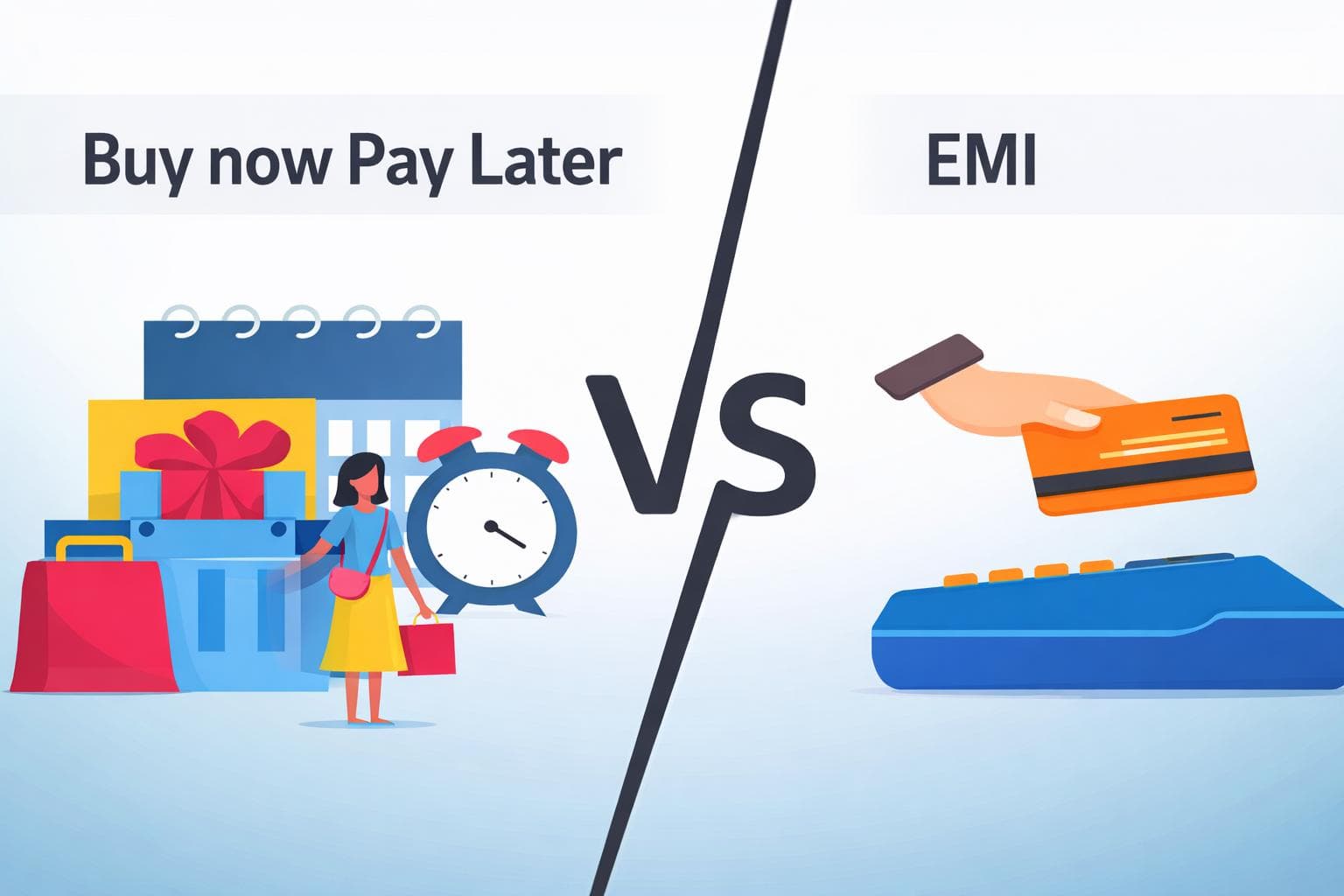
Both products are tailored to meet diverse user needs. I’ve observed that people often confuse BNPL and EMI options due to knowledge gaps, sometimes considering them interchangeable. Let’s delve into a detailed understanding of both these products
BNPL: Buy now pay later
BNPL is typically used for smaller transactions, immediate purchases with short-term repayment schedules and often comes with interest-free options for small tenure. It’s great for short-term financing needs but can lead to debt if not managed properly.
How it works:
Banks and financial apps provides you pre approved limit (like 60000 or below 1 lac)
At checkout, you can choose BNPL as a payment option. If approved, you can make the purchase immediately without paying the full amount upfront.
This purchase amount is basically Interest free over a short period like 15 days and you have to return back money to the banks.
The tenure provided by BNPL is like 15,30, 45, 60 days. And, generally for above 15 days a customer has to pay Simple Interest on due amount.
Customers do not require to pay monthly EMIs. Customers just need to return back money with Interest on the tenure end which he/She has chosen during checkout.
Potential Benefits of BNPL:
Immediate Purchase: Allows you to buy items immediately even if you don’t have the full amount available in your bank.
Interest-Free Period
Convenient: Easy to manage payments through mobile apps and reminders.
No Credit Check: Some BNPL providers do not perform a hard credit check
Potential Drawbacks of BNPL:
Interest Costs: If the purchase is for greater Tenure then it is not interest-free, the interest costs can add up over time, making the purchase more expensive.
Late Fees: Missing payments can result in late fees and penalties, which can add up quickly.
Overspending: The ease of use can lead to overspending and accumulating debt. Sometimes, we can purchase unnecessary things because of the availability of the BNPL feature.
Impact on Credit Score: While some BNPL services do not affect your credit score, others might report late payments to credit bureaus.
EMI: Equated Monthly Installment
EMI is used for larger purchases and involves longer-term commitments with fixed monthly payments. It’s useful for spreading the cost of big-ticket items but can be costly if interest is involved.
Fixed Installments: EMI breaks down the total amount of a purchase into fixed monthly payments over a set period.
Tenures like: 3,6,9,12,36 months.
Interest: EMIs can be interest-free or come with an interest rate, depending on the lender/Manufacture or the offer. Here the Affordability plays crucial role:
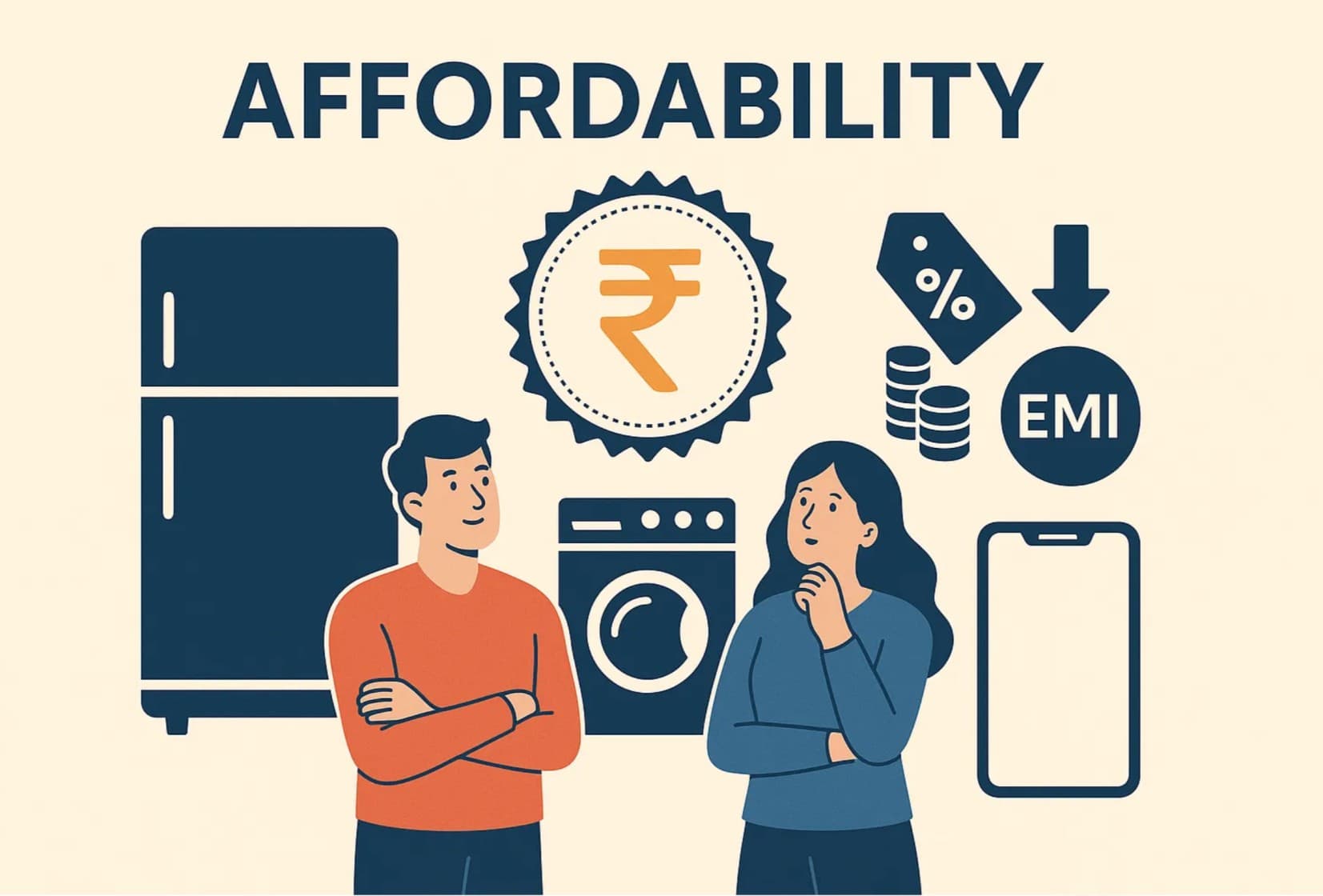
In Affordability: Affordability Purchase on EMI (Equated Monthly Installment) is a financing option that enables consumers to buy items and pay for them over a period of time in fixed monthly payments. This option allows customers to afford higher-priced products that they might not be able to purchase outright. The affordability system also benefits merchants and manufacturers by helping them sell higher-priced products, often by offering small discounts or promotions. And, banks earn Interest income and processing fees. Therefore, the affordability is a win-win product for customers, manufacturers, merchants and Banks.
How it works:
Purchase: When you choose to buy an item, such as electronics, appliances, furniture, or even travel packages, you can opt for the No cost EMI or Low cost EMI option at the point of sale.
Loan Approval: The retailer or financing partner (such as a bank or a financial services company) will evaluate your eligibility for the EMI option, often involving a credit check.
Down Payment: Some EMI schemes may require an upfront down payment, which is a percentage of the total purchase price.
Instalment Schedule: The remaining amount is divided into equal monthly payments over a specified period, which can range from a few months to several years.
Interest Rate: Depending on the scheme, the EMI may be interest-free or may involve an interest rate. Interest-free EMIs are often promotional offers.
Drawbacks of EMI:
Interest Costs: If the EMI scheme is not interest-free, the interest costs can add up over the repayment period, making the purchase more expensive.
Fees and Penalties: Missing an EMI payment can result in late fees, penalties, and a negative impact on your credit score.
Eligibility: Approval for EMI financing often depends on your creditworthiness, meaning those with poor credit may not qualify or may face higher interest rates.
Down Payment: Some NBFC based EMI options require a substantial down payment, which might be a financial strain.
Responses (0)
Leave a response
Related Articles
ULI vs OCEN: Why RBI Built a New Lending Platform When One Was Already There?
India has a interesting problem right now. We have not one but two digital systems trying to fix the same thing i.e. get…
How the Affordability Ecosystem is Evolving for Consumers
Affordability is all about making it easier for consumers, especially those in the middle and lower-middle class people …