20-Year Journey: How Banking Technology Evolved from Legacy to API Ecosystems
Imagine it’s 2002. You walk into a bank branch and fill out a paper form, and wait in a queue. Your passbook gets updated manually or deposit cash. Fintech,…
Imagine it’s 2002. You walk into a bank branch and fill out a paper form, and wait in a queue. Your passbook gets updated manually or deposit cash.
Fintech, Mobile banking Unheard of ? Not even a buzzword !
Let’s understand the evolution of banking systems over the last 20 years — a journey from old legacy system to flexible API-based banking platforms powering today’s digital first banks.
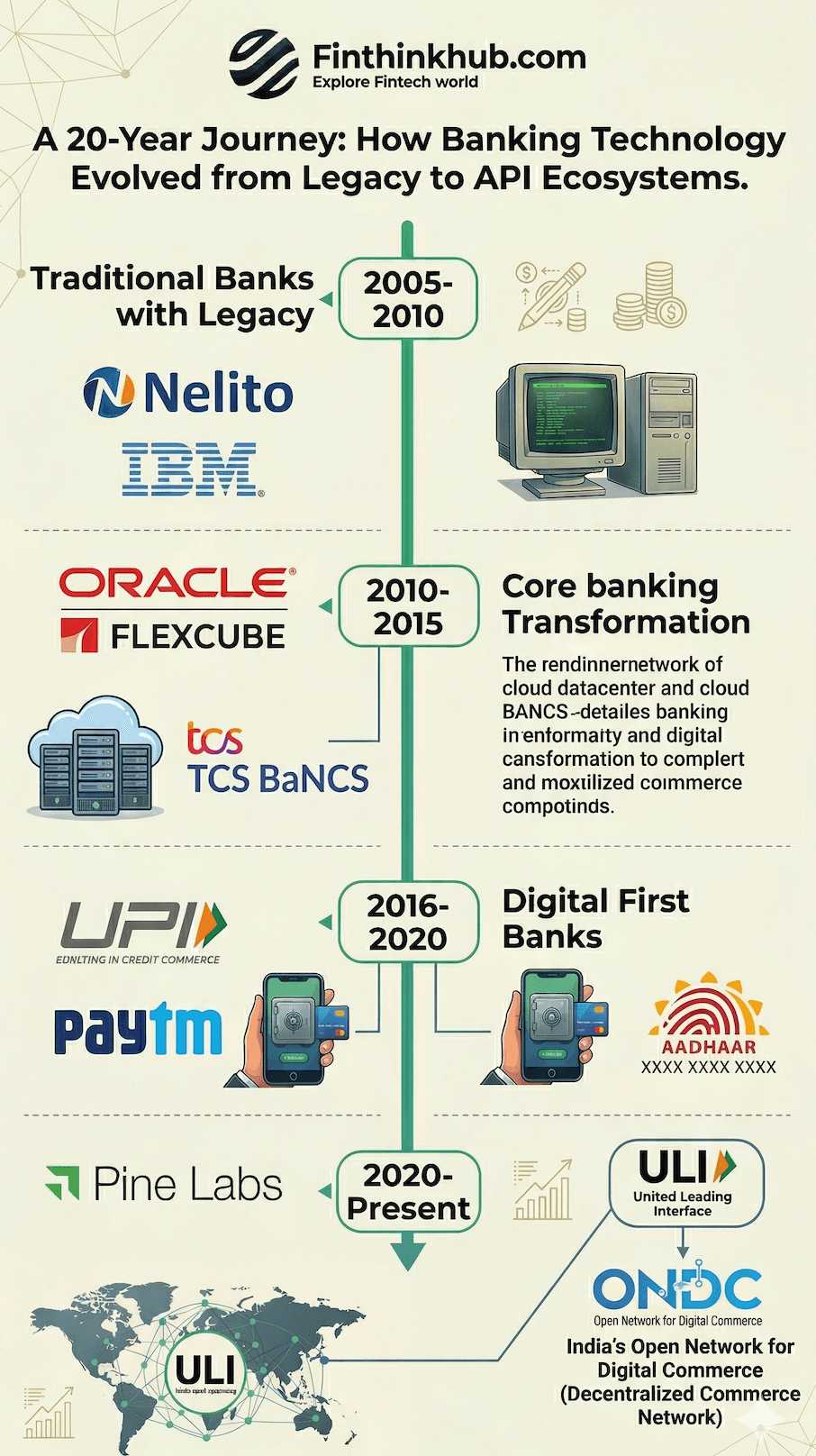
2005–2010: Legacy Systems & Fragmented Back Offices
In this period, banks were dependent on legacy mainframe systems. Many banks developed in-house system or sourced by early vendors. Some examples:
BIBAS (by Nelito) — Used by Rural Banks
BANCS24 — used by Bank of India
Banc 724 (by Zenith Software)
TBA (Total Branch Automation) Systems
MISR — legacy reporting system in many older banks
Tandem/HP NonStop — for transaction switches
AS/400-based systems — common in co-operative and regional banks
These systems were:
Batch-processed and offline in nature
Difficult to scale or integrate with third parties
Maintenance-heavy
Delay in transaction processing
Key Limitation: Branches were not fully connected, customers had to rely on the “home branch” for major transactions, sending money, cheque clearing process.
2010–2015: Core Banking Transformation Begins
As customer expectations increased, banks started migrating to modern Core Banking Systems (CBS). This was the first major digital transformation.
Popular Core Banking Platforms Introduced:
Finacle by Infosys — adopted by ICICI Bank, Union Bank of India, Bank of Baroda , majors PSU banks etc.
Flexcube by Oracle — used by HDFC Bank, Syndicate Bank, Canara Bank etc.
BaNCS by TCS — chosen by SBI for its massive transformation, Bank Of India etc.
Temenos T24 — Equitas Micro Finance India, And used in private and international banks
Benefits:
Centralized operations across all branches
Real-time transaction processing
Support for internet and mobile banking foundations
Banks could now offer basic online services, but innovation was still slow and internal.
2016–2020: Rise of Digital Banking Channels
As smartphones became widespread, digital banking exploded. Banks were started rolling out their mobile apps, web portals, digital lending and digital KYC on top of their CBS.
Key developments:
Launch of UPI, Aadhaar-based onboarding, and e-KYC
Banks began offering 24x7 banking with digital customer journeys
Shift to cloud-ready infrastructure
But banks still struggled to innovate fast. Why? Their core banking systems were monolithic, and digital experiences felt more like add-ons than a seamless part of the platform.
2020–Present: API Banking & Fintech Collaboration Take Center Stage
This period of true digital transformation, driven by:
Fintech revolution like Paytm, Phonepe, Digital Lending application like ziploan, Indifiloan etc.
Regulatory support (like Account Aggregators, RBI sandbox)
Open Banking & API Platforms launched: Banks built API platforms and have exposed their APIs service to the outerworld.
ICICI Bank — API portal
HDFC Bank — API Gateway
Yes Bank’s — YES Fintech Developer Portal
Axis Bank’s- Open APIs
Pine Labs , RazorpayX, Cashfree, Decentro building BaaS for fintechs
Banks exposed APIs for account info, fund transfers, mandates, UPI collections, and credit products.
Fintechs began embedding financial services:
NBFCs, Banks offering loans via Embedded Lending APIs
Insurtechs bundling insurance products for customer to provide products like Personal Insurance, Auto Insurance etc.
Wealth apps consuming mutual fund and demat APIs
Result:
Rapid innovation cycles
New revenue models via BaaS
Democratization of financial services
2023–Present: Banks as Platforms
Today, banks are evolving into platform providers or backend engine — offering financial rails to fintechs, merchants and other 3rd party entities.
Emerging themes:
Micro-services replacing monolithic cores
AI/ML for underwriting, fraud, and personalisation
Composable banking architecture
Real-time regulatory compliance and reporting
Ecosystem play with ONDC, OCEN, ULI and AA frameworks
Conclusion: From Banks to Banking-as-a-Service
In 15 years, banks have transformed from isolated legacy institutions into open, digital-first, API-powered ecosystems. The next phase will blur the lines even further — where customers may not even know who their bank is, but banking will be everywhere
Responses (0)
Leave a response
Related Articles
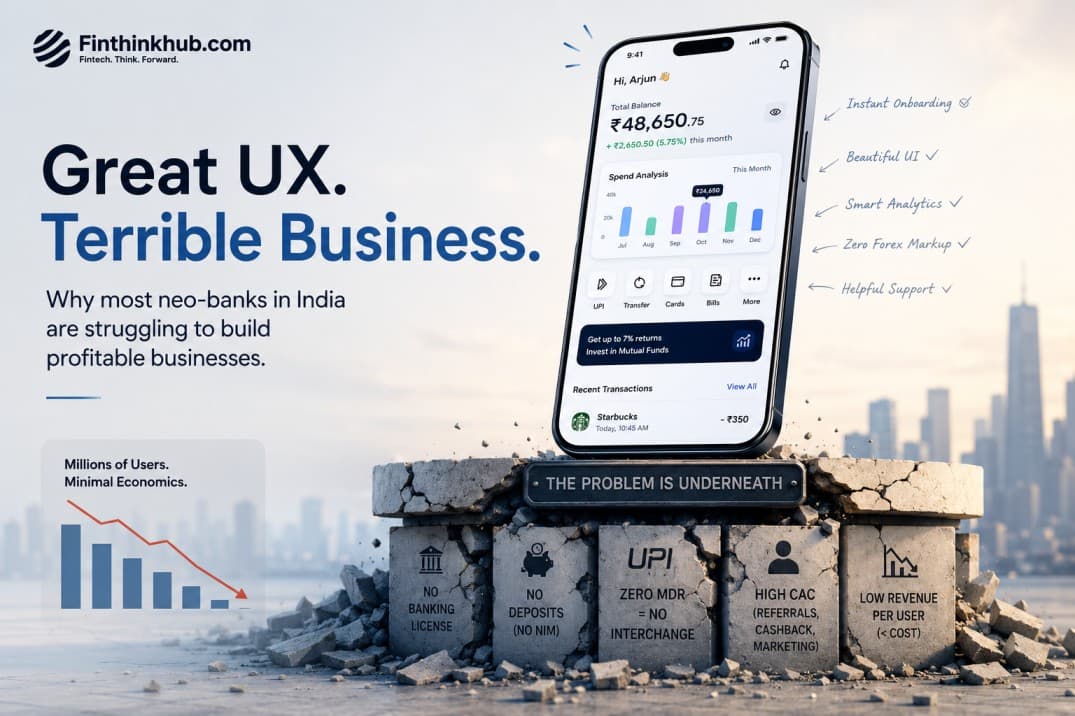
Neo-banks Have Great UX and Terrible Businesses. Here's Why.
They're beautiful. Onboarding in under 3 minutes. Spend analytics that your PSU bank will never build in your lifetime. …
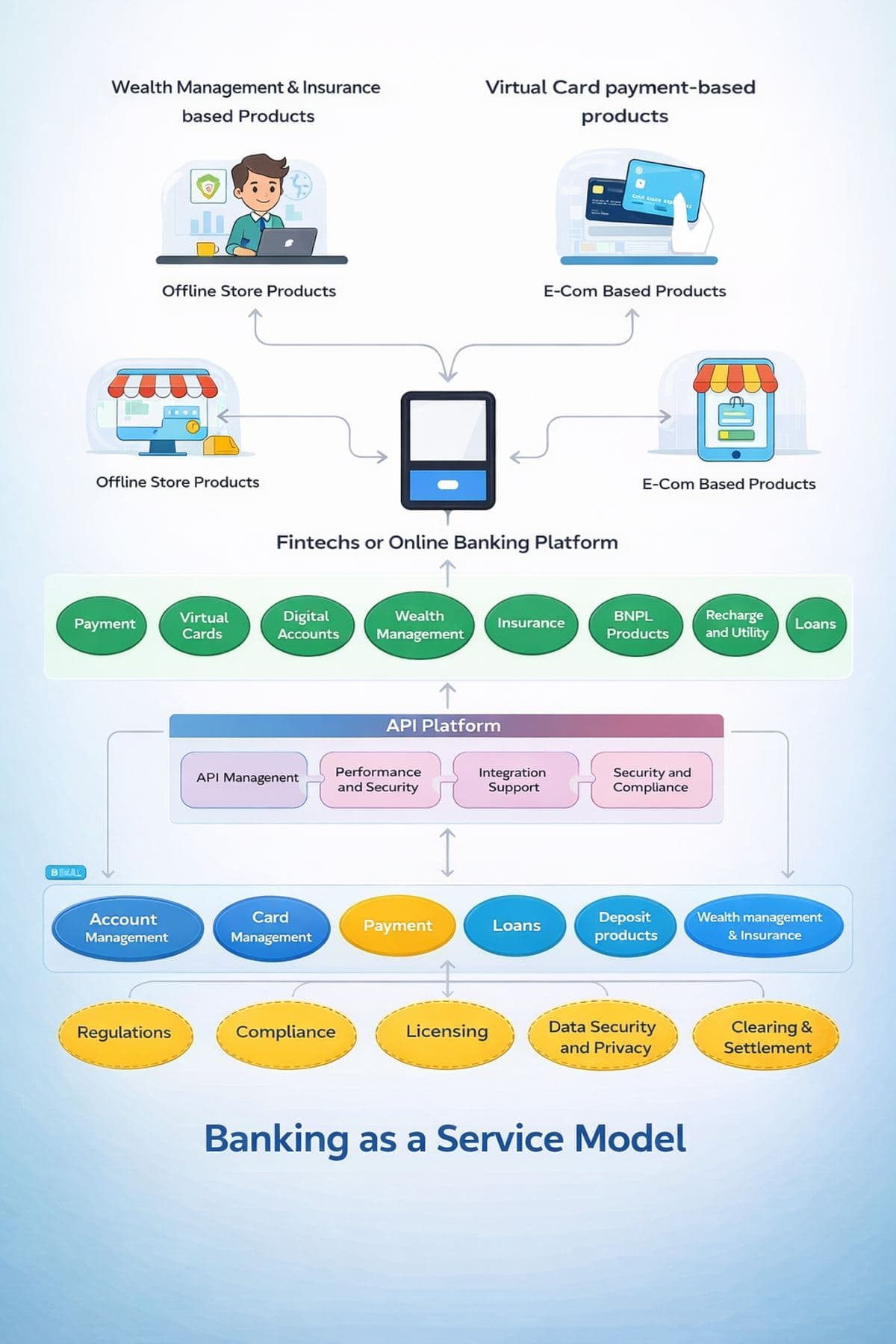
The Core Components of the Banking as a Service Model (BaaS)
In a Banking as a Service (BaaS) model, multiple stakeholders play crucial roles, each with specific responsibilities. H…