Beyond CIBIL: How UPI Is Changing Credit Scoring in India
"How rent payments, UPI transactions and gig income are helping millions of Indians build credit without a traditional credit history." A Zomato delivery…
"How rent payments, UPI transactions and gig income are helping millions of Indians build credit without a traditional credit history."
A Zomato delivery partner in Pune earns a steady income every week. A young professional in Indore pays rent on time every month through UPI. A freelance designer in Jaipur bills clients regularly and never misses a payment. None of this shows up on their CIBIL report. This is credit invisibility, and in India, it affects a far bigger share of the population than most people realise.
What credit invisibility means in India
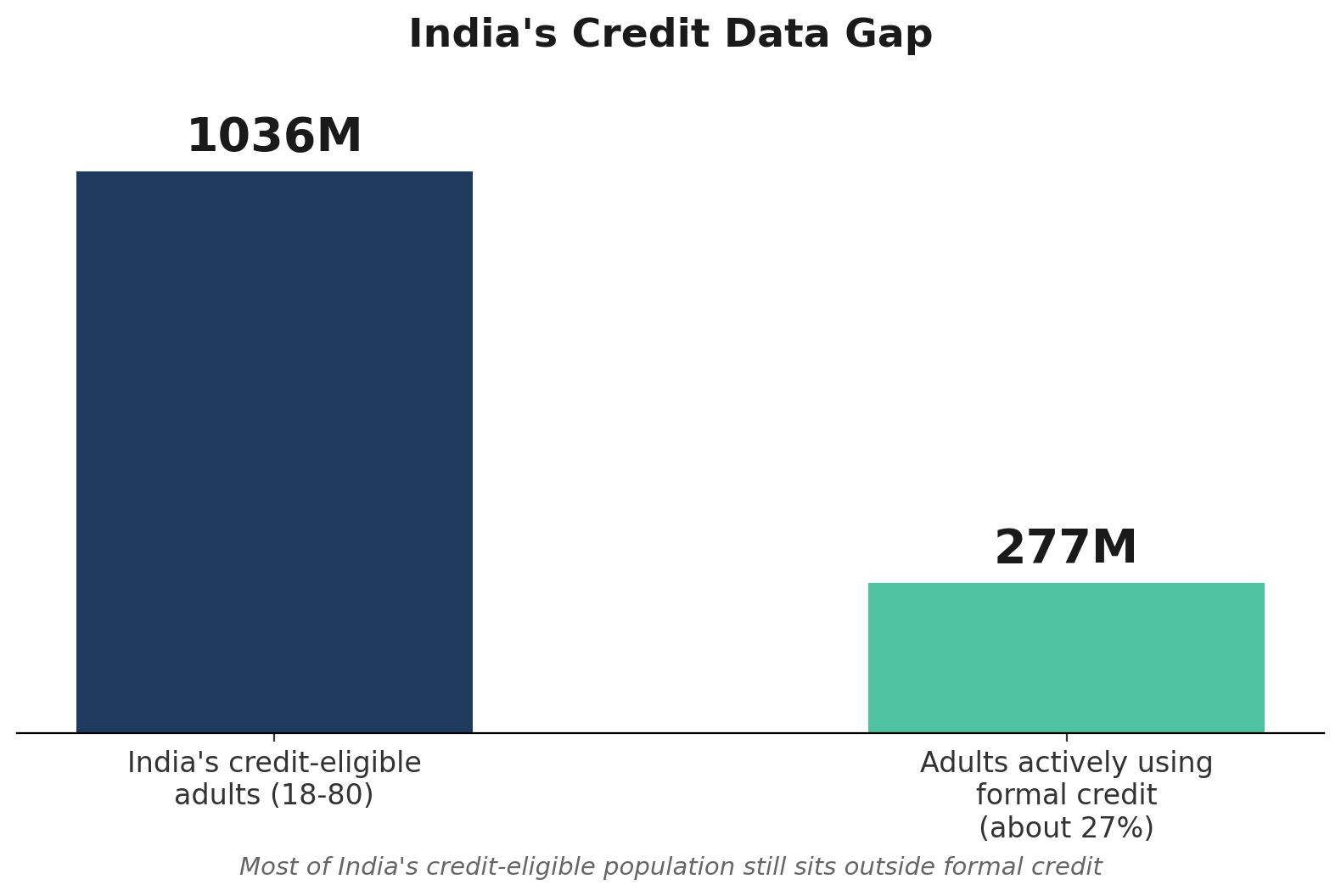
According to World Bank data, India's credit eligible population, adults aged 18 to 80, stood at roughly 1,036 million as of December 2024. Yet only about 27 percent of them, close to 277 million people, actively use formal credit. The rest have either never taken a loan or credit card, or their file is too thin for a bureau like CIBIL, Experian, Equifax, or CRIF High Mark to score reliably.
This isn't a small or unusual group. It includes gig workers, first jobbers, students, homemakers, and small business owners in tier 2 and tier 3 cities. Many of them earn well and pay their bills on time. They simply haven't touched the kind of borrowing that traditional credit bureaus were built to track.
Why the old model doesn't fit India
Traditional credit scoring in India, much like everywhere else, is built on repayment history: credit cards, personal loans, EMIs. If you've never borrowed formally, there's nothing for CIBIL to score, no matter how disciplined you are with money.
This gap is sharpest for India's gig workforce. The sector has grown from 7.7 million workers in FY 2020-21 to about 12 million in FY 2025, and NITI Aayog projects it will reach 23.5 million by 2029-30. A delivery rider for Swiggy or an Ola driver might earn a consistent weekly income, but that income arrives in bursts across multiple apps, not as one predictable salary. Lenders looking only at a bureau score often can't separate a genuinely reliable earner from someone with no income at all.
The old model versus the new model
The simplest way to see this shift is to understand two approaches side by side. The traditional model runs on one input, credit card or loan history, checked against CIBIL. However, The new model pulls in UPI, rent, GST filings, bank statements, and utility bills, routes them through the RBI's Account Aggregator with consent and turns that into an alternative credit score.

The difference isn't just more data. It's a different question being asked. The old model asks whether you've borrowed and repaid before. The new model asks whether your money behaviour, across rent, bills, and daily spending, shows you're reliable, whether or not you've ever touched formal credit.
The shift toward alternative data
UPI is at the centre of this shift. Because most transactions, rent, groceries, subscriptions, and gig payouts, now flow through it, that transaction history has become a rich, real time signal of financial behaviour.
Companies like CARD91, through its BlitzScore engine, and Perfios now build credit scores directly from this data, letting lenders assess gig workers, students, and freelancers without a CIBIL history.
The bigger enabler behind all this is the RBI's Account Aggregator framework, a consent based system that lets people share their financial data, bank statements, GST returns, investment records, securely with lenders. As of December 2025, over 2.61 billion accounts were enabled on the AA framework with 223 million active users. It's still early days: only about 38 percent of borrowers currently have AA enabled accounts, so most lenders still combine it with manual bank statement analysis.
Who's building this
Digital lenders like KreditBee, Fibe, and mPokket already extend first loans to young, thin file borrowers using salary account transactions, UPI behaviour, and device data instead of relying purely on a bureau score. Neobanks like Jupiter are built on the same API first infrastructure that makes this kind of data sharing possible.
On the bureau side, TransUnion CIBIL's own data shows the new to credit segment shifting fast. As of March 2026, half of new credit card holders were aged 30 or under, up from 43 percent four years earlier, and 46 percent came from semi-urban and rural markets, up from 42 percent over the same period. That's a sign the credit net is genuinely widening beyond metro India, even if new to credit's overall share of loans has cooled somewhat as lenders turn more cautious.

Why this matters beyond a single score
This isn't just about approving one more credit card. It's about whether a delivery worker can get a two wheeler loan, whether a freelancer can rent an apartment without a guarantor, and whether a small trader in a tier 3 town can access working capital without going to an informal lender charging punishing rates. For a country where formal credit access still trails far behind the working age population, that matters enormously.
There are real gaps left to close. AA adoption is still under 40 percent of borrowers. UPI based scoring is new enough that not every lender trusts it the way they trust a CIBIL score. And data privacy and consent need to stay front and centre as more of this financial behaviour gets shared and scored.
Even so, the direction is clear. India's credit system is slowly moving from "have you borrowed before" to "are you actually reliable with money," and for hundreds of millions of new to credit Indians, that's a far fairer question to be asked.
References:
Responses (0)
Leave a response
Related Articles
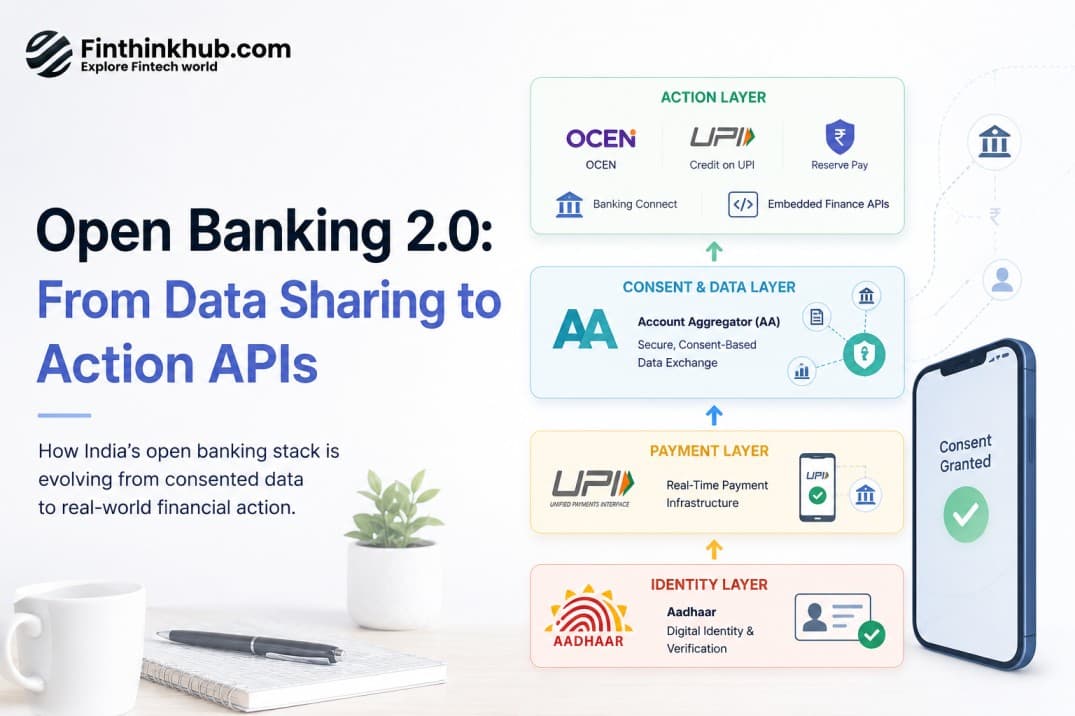
Open Banking 2.0: When APIs Stop Sharing Data and Start Taking Action
India has always built financial infrastructure in layers. Aadhaar gave every citizen a verifiable digital identity. UPI…

What If UPI Had an AI Layer?
What If UPI Had an AI Layer?So UPI is already kind of magical, right? Scan a QR, money moves in seconds. But the questio…
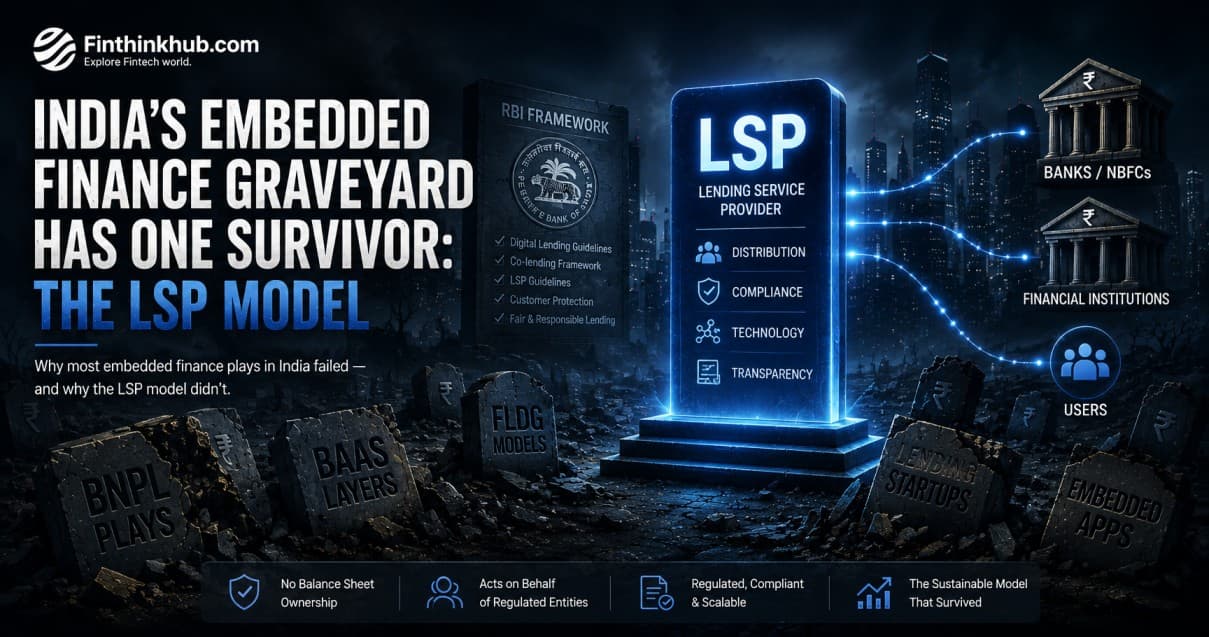
India's Embedded Finance Graveyard Has One Survivor: The LSP Model
Every fintech pitch deck in 2021 had the same slide. A giant market size number. A simple diagram. And the promise that …