Beyond UPI: How Fintechs Are Turning Payments into Wealth and Lending Platforms
India's fintech story started with a basic need. People wanted to send money quickly and cheaply and, UPI solved that. Once it became part of everyday life,…
India's fintech story started with a basic need. People wanted to send money quickly and cheaply and, UPI solved that. Once it became part of everyday life, the companies (especially Fintech) sitting on those rails faced a clear problem. Payments alone do not make enough money. Fees are low or zero on many transfers. So they began adding two stronger profit engines on top of the same app: wealth tech and lending.
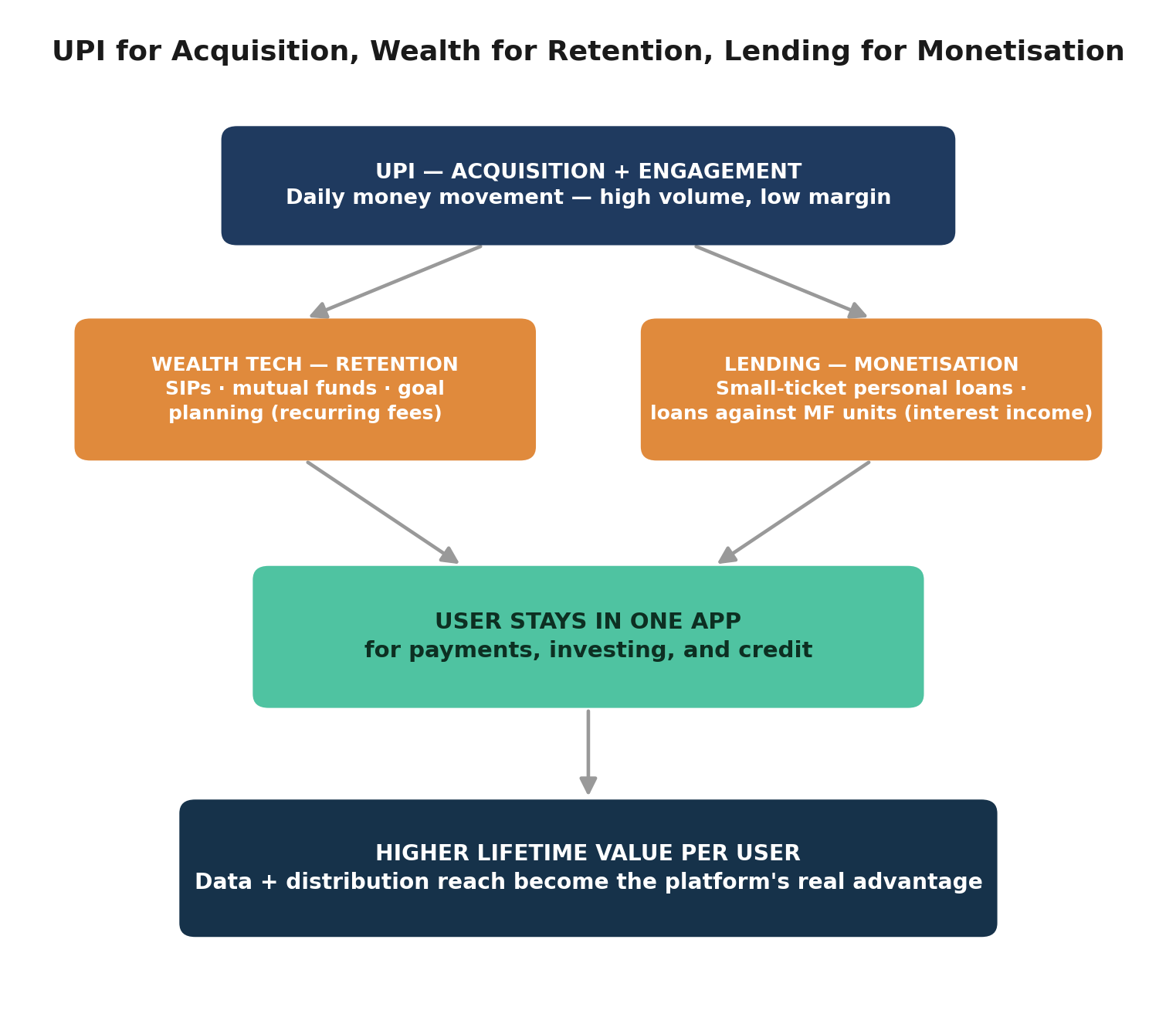
Here's the sharper way to see it. UPI's job is acquisition and engagement, it's what gets someone onto the app and keeps them opening it every day. Wealth tech's job is retention, a mutual fund SIP or a gold plan gives someone a reason to stay for years, not weeks. Lending is where monetisation really happens, interest income scales in a way that near-zero payment fees never will. And underneath all three, the data a platform builds up and its distribution reach become its real competitive advantage.
UPI as the acquisition engine
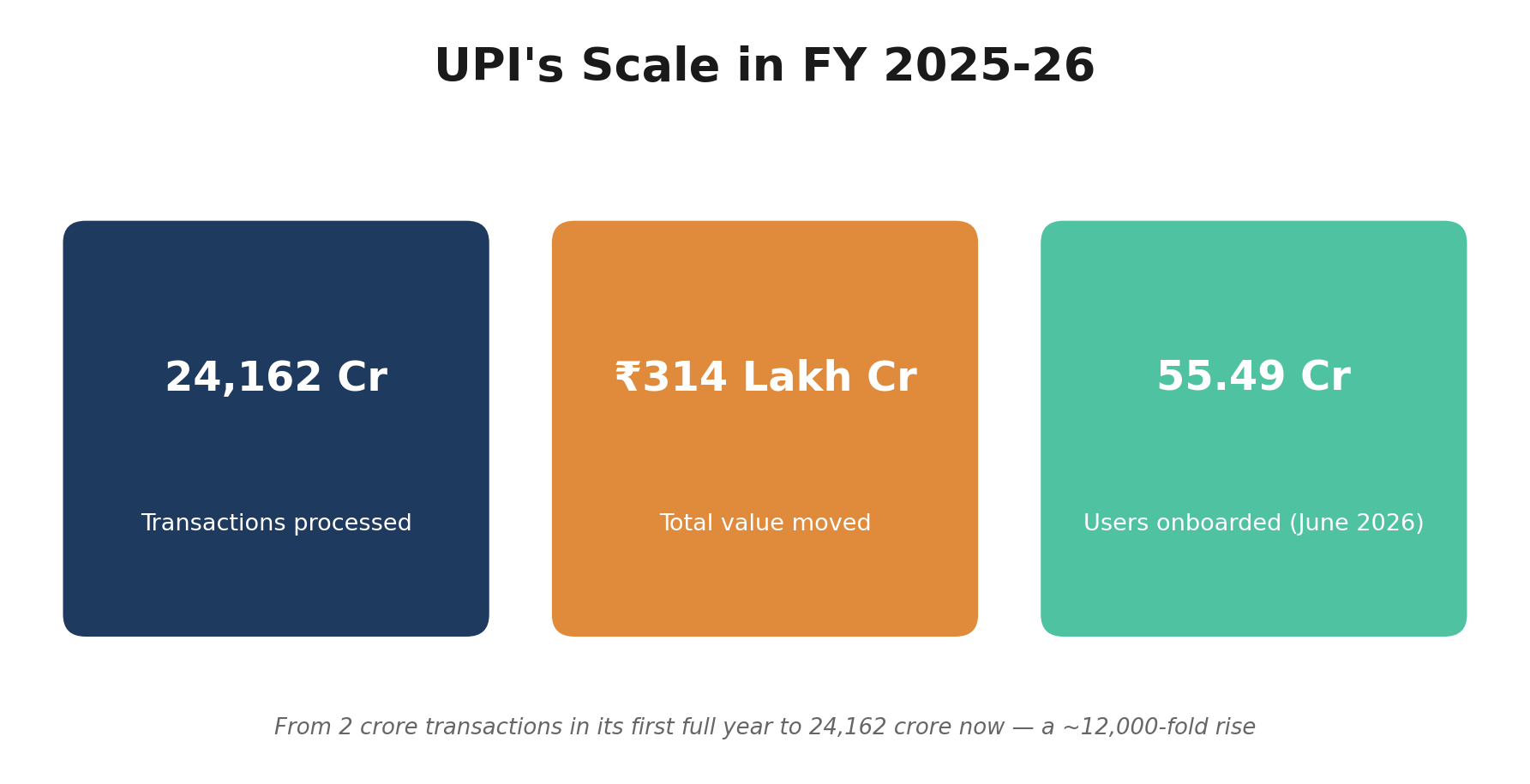
UPI numbers show how strong that base has become. In FY 2025-26 the system processed 24,161.69 crore transactions worth ₹314.23 lakh crore, up 30 percent year-on-year in volume. As of June 2026, 55.49 crore users had been onboarded, according to NPCI data cited by the government. From just 2 crore transactions in its first full year (FY 2016-17) to over 24,000 crore now is almost a 12,000-fold rise.
This scale creates a powerful advantage, but it's an acquisition advantage more than anything else. Platforms get a huge number of people in the door and a reason for them to open the app daily. What they do with that attention next is a separate business decision.
Wealth tech as the retention layer
Once a person uses the app every day for payments, starting a small SIP feels natural. Fintech platforms began offering mutual funds, digital gold, and fixed deposits inside the same interface. No new app. No branch visit.
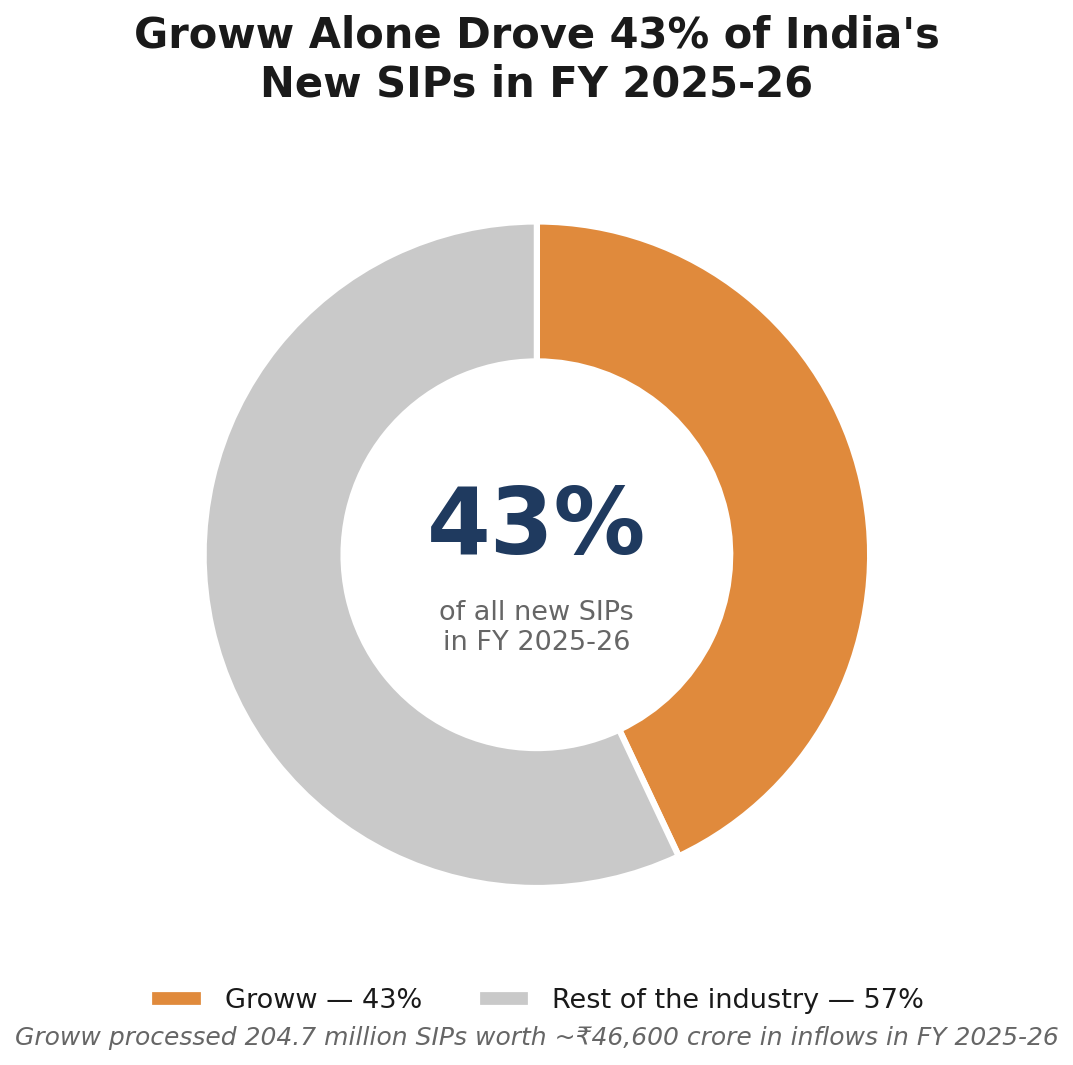
The results are visible. According to Groww's FY26 Annual Report, the platform accounted for 43 percent of all new SIPs registered in India during FY 2025-26. Its mutual fund business processed 204.7 million SIPs and pulled in roughly ₹46,600 crore in SIP inflows over the year, taking mutual fund assets on the platform to about ₹1.57 lakh crore by March 2026.
Other payment-first players such as PhonePe have followed a similar path into wealth distribution. Many first-time investors on these platforms never meet a traditional distributor. They start with the app they already trust for UPI, which is exactly the retention effect at work.
Wealth products bring better economics than payments. Distribution commissions and asset-based fees last longer than one-time transaction charges. A user who starts a monthly SIP of even ₹500 becomes more valuable over time, and more likely to stick around.
Lending as the monetisation layer
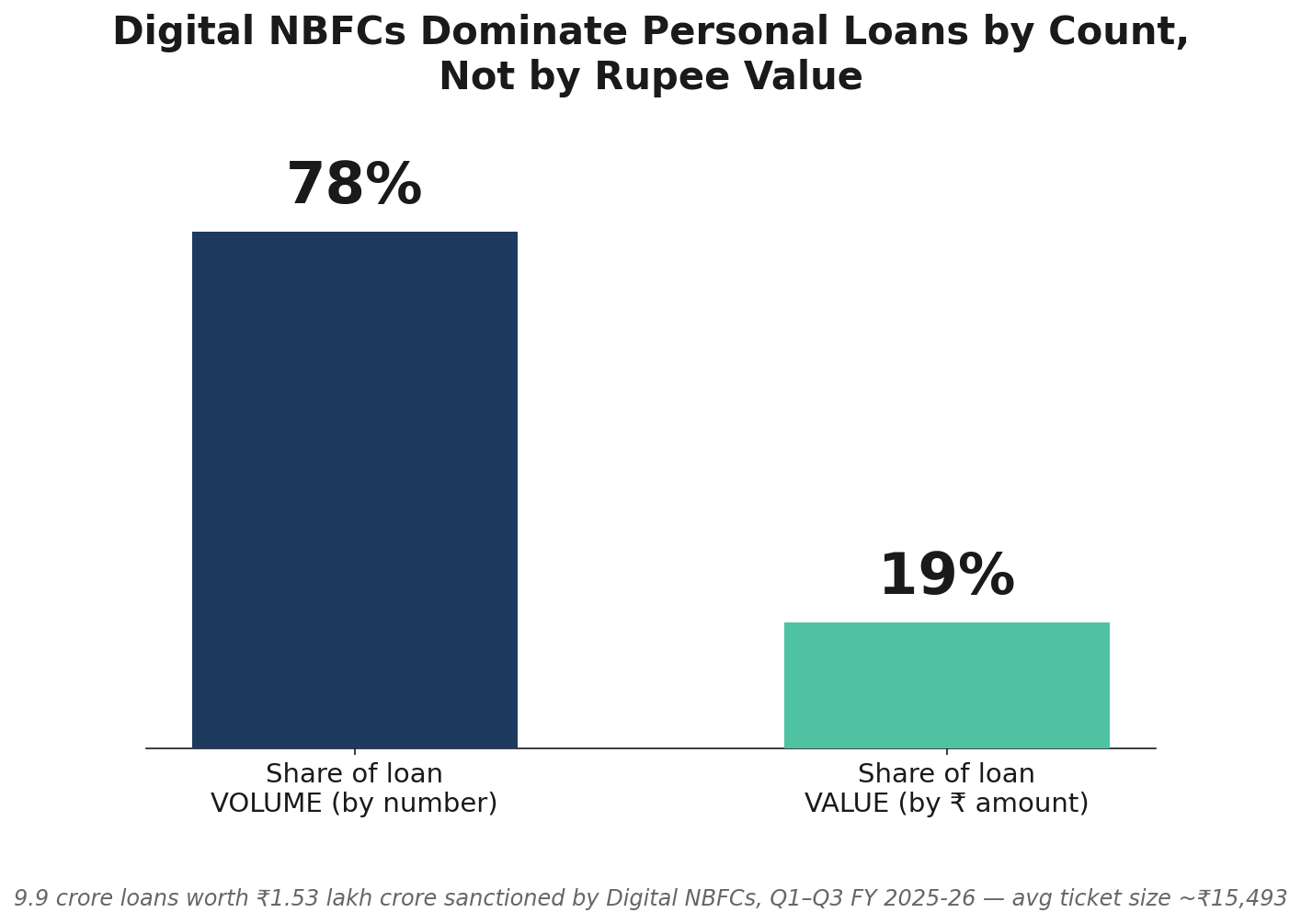
Lending is where the real revenue shows up. Digital NBFCs, the fintech-backed lenders that originate loans mostly through their own or LSP partner apps, now account for a large share of small personal loans by number, though a much smaller share by rupee value.
According to FACE (the Fintech Association for Consumer Empowerment), using CRIF High Mark bureau data, Digital NBFCs sanctioned 9.9 crore personal loans worth ₹1.53 lakh crore in the first three quarters of FY 2025-26 alone. That was 78 percent of all personal loan sanction volume in the market that period, but only 19 percent of sanction value, because the average ticket size stayed small at around ₹15,493.
Some platforms also offer loans against mutual fund units, so investors can access cash without selling their holdings, a natural extension once a platform already has both the wealth and lending pieces in place.
How the three layers fit together
Putting the pieces together, the sequence usually looks like this:
UPI brings the user in and keeps them coming back daily, acquisition and engagement, at near-zero margin
Wealth tech turns that daily habit into a relationship, SIPs, mutual funds, and goal tracking build retention and recurring fee income
Lending turns the relationship into real revenue, small personal loans and credit against investments are where interest income scales
The user ends up staying inside one app for payments, investing, and credit
The data and distribution reach built up along the way become the platform's actual competitive advantage, more than any single product
Why this works for Indian users
Most Indians still enter formal finance through a phone rather than a branch. A payments app already holds basic KYC and transaction history. Adding SIPs and small loans on the same rails reduces friction. A delivery partner or a young professional can start investing ₹100 a day or take a short-term loan without filling new forms every time.
The data can support better decisions too, within limits. Steady, verifiable income patterns can be one useful input for assessing repayment capacity on a small loan. Regular SIP behaviour can be one signal of discipline for longer-term products. Neither replaces a lender's own underwriting; both are supplements to it.
What still needs care
The model is powerful but not automatic. Lending requires strong risk management, especially as ticket sizes and volumes climb. Wealth products need clear disclosure of costs and risks. Users must understand what they are buying. Platforms that push products only for higher commissions will lose trust over time.
Regulation continues to shape the space. RBI and SEBI keep tightening rules around digital lending, data sharing, and distribution, and the Account Aggregator framework in particular exists precisely to make consent-based data sharing auditable rather than informal. Companies that treat compliance as core, not optional, will last longer.
Looking Forward
The progression is now clear. UPI created the daily habit. Wealth tech and lending turned that habit into profit. The next stage likely pushes this further rather than introducing something entirely new. RBI's Account Aggregator framework is still working through adoption, but it's designed to make consent-based data sharing for underwriting more standardised across lenders. Credit Line on UPI is beginning to let banks and NBFCs extend pre-approved credit limits that customers can spend directly through UPI, effectively merging payments and lending at the moment of transaction. ONDC's financial services network has facilitated its first credit and invoice-financing transactions, though it remains early and largely unproven at scale.
None of these are mainstream yet. But together they point toward a future where UPI-led distribution, consent-based data sharing, and embedded credit combine even more tightly than the wealth-plus-lending model already reshaping how millions of Indians handle money today.
Sources and references
UPI processed 24,161.69 crore transactions worth ₹314.23 lakh crore in FY 2025-26, and 55.49 crore users had been onboarded as of June 2026. PIB / NPCI, "Nearly 55.49 Crore Users Onboarded on UPI as in June 2026"
Groww accounted for 43% of all new SIPs registered in India in FY26, processed 204.7 million SIPs worth ₹466 billion (~₹46,600 crore) in inflows, held ₹1,570 billion (~₹1.57 lakh crore) in mutual fund AUM, saw nearly seven in ten active users adopt more than one product, and had 84% of transacting users outside India's top six cities. BusinessToday, citing Groww's FY26 Annual Report, "India's investing story is now in small towns"
Digital NBFCs sanctioned 9.9 crore personal loans worth ₹1.53 lakh crore in Q1–Q3 FY 2025-26, 78% of sanction volume but only 19% of sanction value in the overall personal loan market, at an average ticket size of ₹15,493. FACE (Fintech Association for Consumer Empowerment), "Digital Personal Loans" report, based on CRIF High Mark data
ONDC's financial services network is in early stages and has facilitated its first credit transactions. Swiffy Labs, "ONDC FS: the UPI unlock for credit in India"
Responses (0)
Leave a response
Related Articles
What Happens When You Send Money on UPI: A Complete Breakdown
You send ₹1,000 to Tarun who is your colleague in Noida on UPI. Your phone buzzes, the app shows a green tick, "Payment …
Beyond CIBIL: How UPI Is Changing Credit Scoring in India
"How rent payments, UPI transactions and gig income are helping millions of Indians build credit without a traditional c…
Open Banking 2.0: When APIs Stop Sharing Data and Start Taking Action
India has always built financial infrastructure in layers. Aadhaar gave every citizen a verifiable digital identity. UPI…