Embedded Lending: An Architecture Overview of the Customer Experience
Architecture Overview Architecture overview for a customer journey in embedded lending that includes interactions between the Customer, Merchant, LSP (Lending…
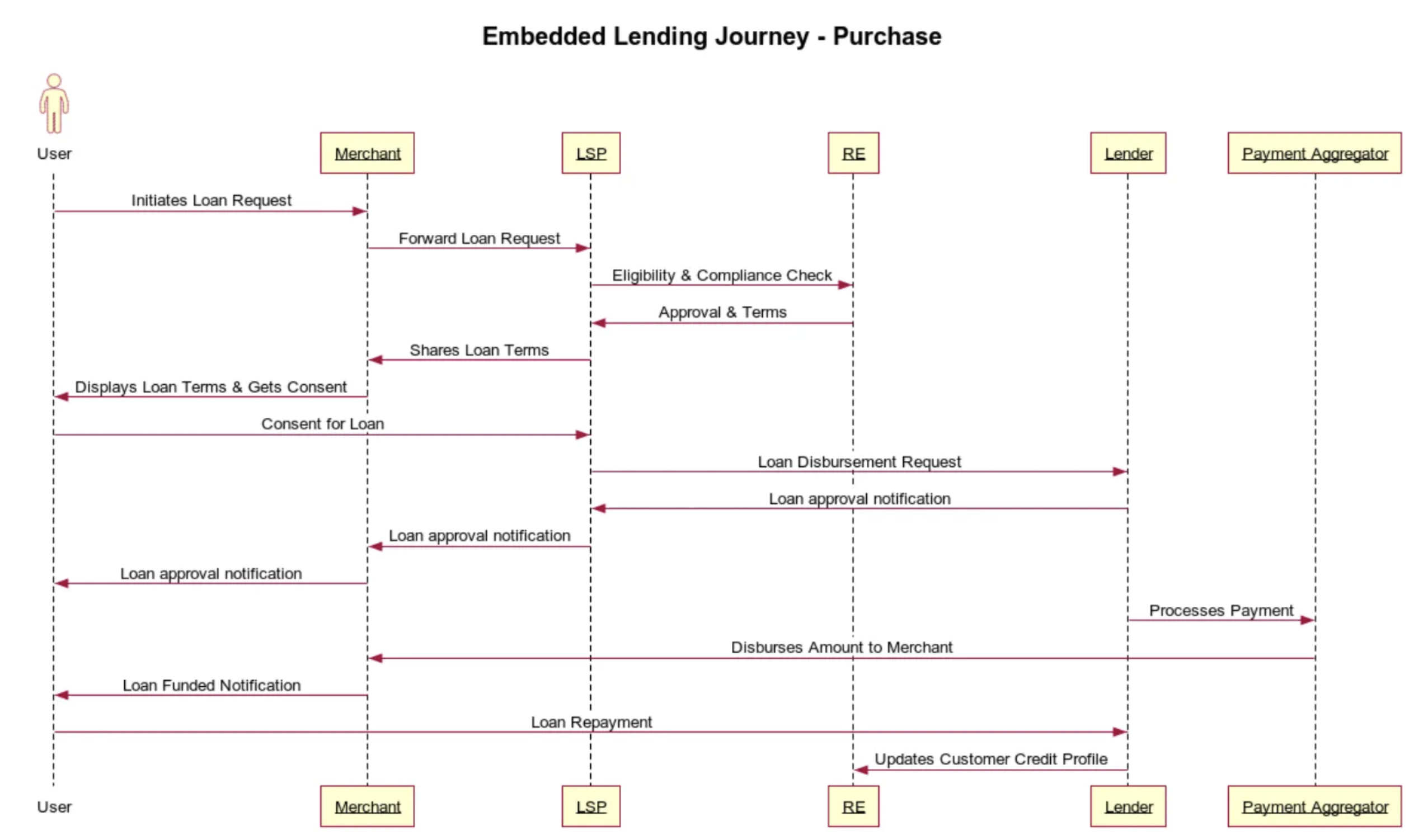
Architecture Overview
Architecture overview for a customer journey in embedded lending that includes interactions between the Customer, Merchant, LSP (Lending Service Provider), RE (Regulated Entity), Payment Aggregator, and Lender, in alignment with the DLG (Digital Lending Guidelines).
User:
Initiates the loan request through the Merchant platform or app.
Shares consent and basic KYC data, initiating the lending journey.
Merchant Platform:
Provides the interface for Customer to apply for credit and shares details with LSP.
Connects with the Payment Aggregator for payment processing and with LSP for loan eligibility and terms.
Ensures transparency in terms of charges, interest rates, and fees.
LSP (Lending Service Provider):
Acts as an intermediary, managing the loan process between Customer, RE, and Lender.
Fetches Customer KYC, verifies identity through APIs with regulated KYC providers like UDAI.
Interfaces with RE for regulatory compliance checks and risk profiling.
Facilitates data protection by encrypting personal data before sharing with RE and Lender.
LSP share notification to merchant once loan request approves
RE (Regulated Entity):
Regulated by the central authority (such as the RBI in India) and oversees all financial compliance.
Conducts risk analysis, fraud checks, and approves or denies the loan request based on credit-worthiness.
Banks and Non-Banking Financial Companies (NBFCs) are approved by RBI to work as RE.
Provides regulatory reporting and storage of approved borrower details, ensuring compliance with DLG guidelines.
Payment Aggregator:
Processes payments and ensures transactions between Customer, Merchant, and LSP.
Manages transactions, refunds, partial payments, and reconciliations.
Provides seamless integrations and instant payment notifications back to the LSP and Merchant for real-time updates.
Helps in funds processing between lender and merchant.
Lender:
Provides the capital for lending, typically a bank or a financial institution.
Partners with RE to access customer risk assessments and lending terms.
Disburses the loan amount directly to the Payment aggregator if it’s a purchase-related loan.
Manages collections, repayments, EMIs, and Interest calculations.
Responses (0)
Leave a response
Related Articles

P2P Lending in India: The Risk Behind the 12% Return
Remember the "12% returns" tab inside Cred, BharatPe or MobiKwik apps some years back? Put money in, take it out wheneve…
Beyond UPI: How Fintechs Are Turning Payments into Wealth and Lending Platforms
India's fintech story started with a basic need. People wanted to send money quickly and cheaply and, UPI solved that. O…
Beyond CIBIL: How UPI Is Changing Credit Scoring in India
"How rent payments, UPI transactions and gig income are helping millions of Indians build credit without a traditional c…