India's Embedded Finance Graveyard Has One Survivor: The LSP Model
Every fintech pitch deck in 2021 had the same slide. A giant market size number. A simple diagram. And the promise that any company with a decent customer base…
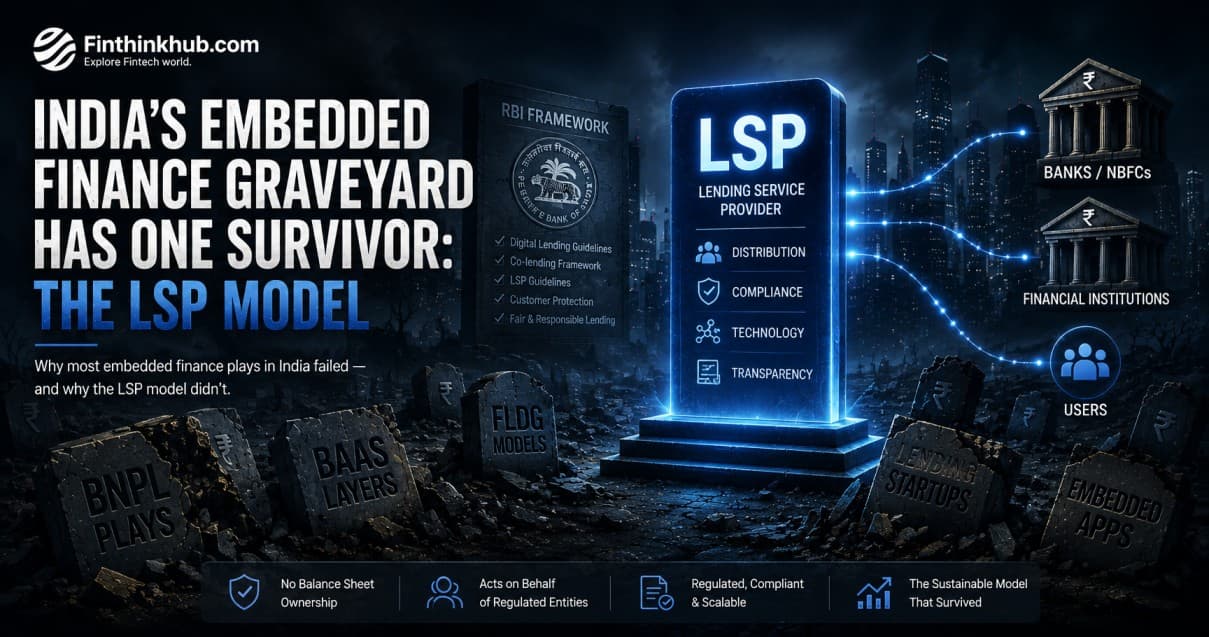
Every fintech pitch deck in 2021 had the same slide. A giant market size number. A simple diagram. And the promise that any company with a decent customer base could now offer loans, wallets, and insurance without becoming a bank.
Embedded finance was the big unlock. The logic was solid too. If a platform already has the customer relationship, the transaction data, and the trust, why not let it offer financial products on top? Plug in a BaaS provider, go live in a few weeks.
Except that's not what happened. Most of them quietly failed. Some ran into RBI. Some ran into unit economics that never worked. Some built something their users never actually wanted.
This isn't an argument that embedded finance is a bad idea. It isn't. But if you're building in this space right now, or you're in a room where someone just said "let's add a lending product to our app," you need to understand what actually goes wrong. Because a lot goes wrong, and the Indian market has its own version of almost every failure mode.
ZestMoney Is The Story Everyone Should Have Learned From
ZestMoney was one of the most promising embedded BNPL players in the country. The idea was genuinely smart: let users pay in EMIs at checkout even without a credit card using a combination of data lines and BNPL credit. Zest partnered with hundreds of merchants. They had Goldman Sachs involved at one point. They raised good money.
And then in late 2023, they shut down. PhonePe had tried to acquire them and walked away.
What went wrong? A few things but the core issue was credit quality. Their customer base was largely thin-file borrowers who don't show up in bureau data. That's actually a real problem worth solving. But solving it requires getting your underwriting very right, very fast. ZestMoney didn't get there before the capital ran out.
The embedded finance pitch said: "We have purchase intent data, that makes us better at credit decisions." The reality was messier. Purchase intent tells you what someone wants to buy. It doesn't reliably tell you if they'll repay a loan.
That gap, between what the data promises and what it actually predicts is where a lot of Indian embedded lending plays quietly fell apart.
The RBI Came In and Changed Everything
Here's something that genuinely caught a lot of founders off guard. Embedded finance in India was partly built on regulatory ambiguity. The structure went something like this: an NBFC or a bank did the actual lending, a fintech sat on top as the "technology partner," and the fintech might took a first-loss default guarantee (FLDG) to share in the credit risk without technically being a lender.
This arrangement let fintech companies access the economics of lending without holding an NBFC licence. It also let them claim they were "just a tech company" when convenient.
The RBI noticed. In September 2022, the digital lending guidelines landed, and they were more detailed than most people expected. Loan disbursals now had to go directly to the borrower's bank account, not through the fintech's wallet or platform account. EMI collections couldn't pass through the fintech either. And the concept of a "Lending Service Provider" got clearly defined, along with what they could and couldn't do.
The LSP Opportunity: Why This Could Be the Next Big Thing in Embedded Finance
Let's back up a bit. When the RBI released its digital lending guidelines in 2022, a lot of founders read it as a set of restrictions. And in some ways it was. But buried in that framework was something constructive: a formally recognised, clearly defined role for technology companies in the lending ecosystem that doesn't require them to be a bank or an NBFC.
An LSP is essentially a regulated entity's front-end for lending. You can source customers, do preliminary eligibility checks, handle loan application journeys, collect documents. What you can't do is touch the money. Disbursals and collections have to go directly between the lender and the borrower. But everything else around the lending experience? That's fair game.
This matters more than it looks like on the surface.
Think about what most embedded finance failures actually had in common. They tried to be in the middle of the money flow. They took balance sheet risk they weren't equipped for. They depended on FLDG structures that got capped. They needed NBFC licences that took years and capital to get. The LSP model sidesteps almost all of that.
As an LSP, a platform company does what it's already good at: it knows its users, it has trust with them, it has data about them. It hands that context to a bank or NBFC, which does the actual underwriting and takes the credit risk. The platform earns a distribution or referral fee. No balance sheet exposure. No RBI licence requirement for the platform itself. Clean, fee-based revenue.
Sounds simple. But the opportunity is larger than it sounds, especially when you combine it with what's now possible in India's data infrastructure.
Consider this scenario. A SaaS company selling accounting software to small businesses in Tier 2 cities knows their merchants' monthly revenue, their seasonal cash flow patterns, their GST filing consistency, their accounts receivable aging. None of this shows up in a bureau score. But it's genuinely predictive credit data. This company becomes an LSP for a partner NBFC, passes this data through in a structured way and enables the NBFC to offer working capital loans that are better priced and better underwritten than anything a merchant could get walking into a branch.
The SaaS company earns a fee per loan originated. The NBFC gets access to a customer segment they couldn't reach or underwrite well on their own. The merchant gets credit that reflects their actual business. Everyone wins, and nobody is pretending to be a bank.
The fee economics are also more predictable than the FLDG model ever was. You're not taking a first-loss position on a portfolio you can't control. You're earning a distribution fee on loans that a qualified lender is underwriting with your data as input. Your downside is capped. Your revenue is more linear.
The infrastructure to do this is already here. Account Aggregator handles the consent layer. Multiple NBFCs and banks are actively looking for good LSP partners because the alternative is building distribution from scratch. And the RBI has made the rules clear enough that a well-advised team can structure an LSP arrangement without living in regulatory grey area.
This is the embedded finance opportunity that didn't blow up. It's not as flashy as owning the whole lending stack. But it's real, it's scalable, and it's actually what the market needs right now after watching the first generation of embedded lenders run into walls.
If you're a founder thinking about embedded finance in 2026, the question isn't just "should we offer loans?" The question is: "Do we have data and distribution that a lender would pay to access?" If yes, the LSP path is worth a serious look. It might be the most durable embedded finance business model India has actually built a regulatory home for.
Responses (0)
Leave a response
Related Articles

P2P Lending in India: The Risk Behind the 12% Return
Remember the "12% returns" tab inside Cred, BharatPe or MobiKwik apps some years back? Put money in, take it out wheneve…
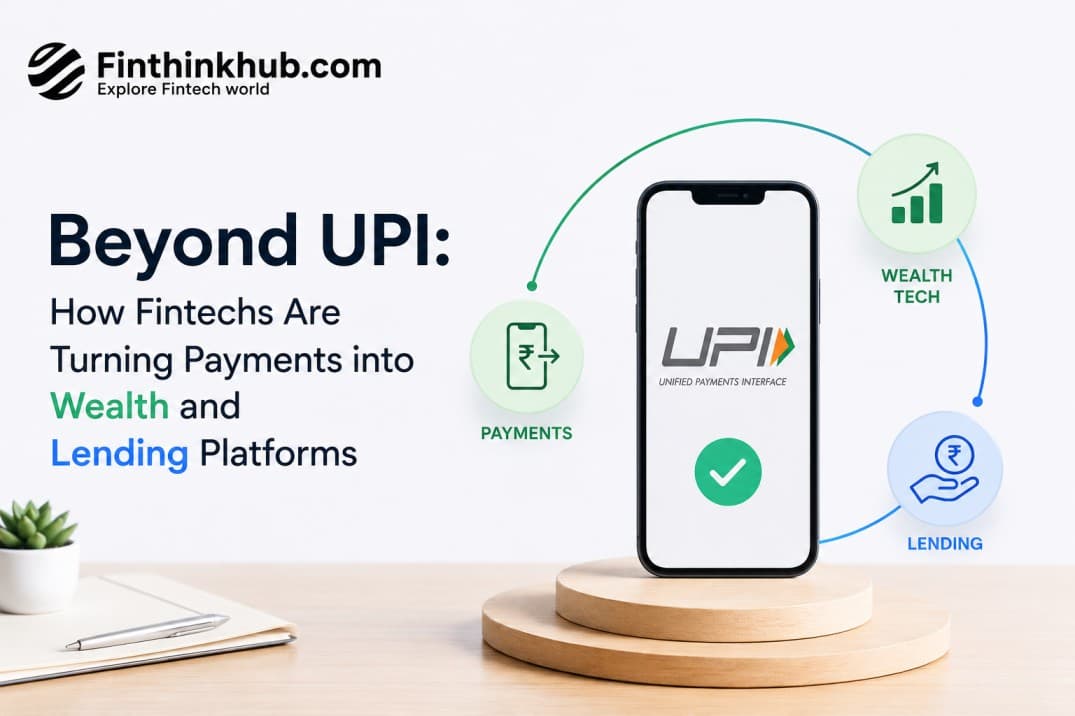
Beyond UPI: How Fintechs Are Turning Payments into Wealth and Lending Platforms
India's fintech story started with a basic need. People wanted to send money quickly and cheaply and, UPI solved that. O…
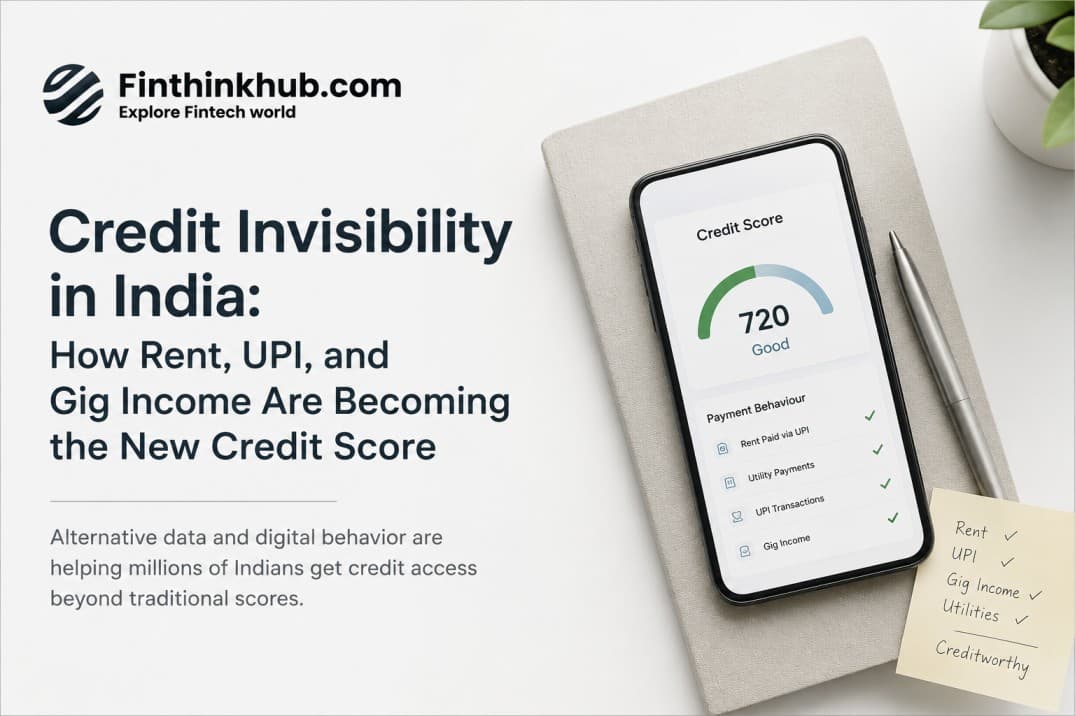
Beyond CIBIL: How UPI Is Changing Credit Scoring in India
"How rent payments, UPI transactions and gig income are helping millions of Indians build credit without a traditional c…