What If UPI Had an AI Layer?
What If UPI Had an AI Layer? So UPI is already kind of magical, right? Scan a QR, money moves in seconds. But the question keep coming back to is not "what AI…

What If UPI Had an AI Layer?
So UPI is already kind of magical, right? Scan a QR, money moves in seconds. But the question keep coming back to is not "what AI features can we add to UPI apps?" like spend insights, fraud nudges, bill reminders. That stuff is already being built. The real question is harder.
Where does AI actually sit in the UPI stack and does the answer even matter?
It does. A lot. Because the architecture decides everything. What data AI can see, who is liable when it goes wrong, and whether AI stays a helpful assistant or becomes an actual financial actor.
UPI is a rails system. AI is not.
Before we talk about the AI layer, its worth being clear on what UPI actually is.
UPI works on majorly three principal 1) an identity (user VPA), a Authentication mechanism (user PIN), and settlement rails. That's it. It moves money fast and reliably. It doesn't care if you're paying rent or your 4th coffee today.

My View: There's no single "AI layer". There are five.
Each layer has a different data access, different regulatory standing, and a different version of what "AI in UPI" actually means.
On-device AI — sees only user transactions, runs locally, good for privacy, useless for cross-network fraud patterns. Realistic today with on-device models. But limited.
PSP layer (PhonePe, GPay) — sees your full transaction history within their app, plus merchant-side data. This is where most "AI features" will land first like spend insights, anomaly detection, suggested payments. Clearest regulatory path. Also the most siloed — as GPay PSP can't see your PhonePe PSP transactions.
NPCI layer — the only entity with the complete cross-PSP transaction knowledge. AI here means network-level fraud detection, systemic risk monitoring, real-time behavioral scoring across all of UPI. Genuinely powerful.
Issuer bank layer — processes the debit/credit when NPCI instructs it to. That's largely it. Banks are passive participants in a UPI transaction. As there's no real-time intelligence layer sitting on top at the issuer side today.
AI agent layer (via Account Aggregator) — this is where AA actually belongs. Banks are FIPs in the AA framework — they supply data when an external FIU requests it with user consent. A third-party AI agent is the FIU and it pulls your financial information from multiple banks via AA and initiates actions via UPI. The issuer never actively participates in this intelligence loop basically, it's just a data source.
Why an AI agent needs "Account Aggregator"
Here's the problem with an AI agent that only sees your UPI transaction history.
UPI transactions tell the agent what you spent. But to act autonomously on your behalf, the agent needs to know your full financial position — balances across all your bank accounts, upcoming EMIs, whether your salary has credited yet this month.
A PSP (Gpay, Paytm or Phonepe) only holds a slice of that picture. If you have accounts in three banks and use two different UPI apps, no single PSP sees everything.
This is where Account Aggregator fits as the financial context layer for autonomous payment decisions.
AA gives the agent the why and the when. UPI gives the agent the how.
A concrete example: your AI agent is managing vendor payments for a small business. Before releasing a ₹2L payment, it checks via AA — salary credits haven't come in yet across the business accounts, and an EMI is due tomorrow. So it holds the payment by 48 hours. No human needed to make that call. The agent had enough context to decide.
That's not credit underwriting. That's financial awareness for autonomous action and it's the combination that makes an AI agent genuinely useful.
The question nobody is asking: can AI be a UPI user?
Every conversation about AI in payments assumes AI is helping a human transact. But what happens when AI is the one transacting?
UPI's consent model was designed for humans. The PIN exists so only you can authorize a payment. An AI can't enter your PIN, which means any "autonomous" AI payment has to go through pre-authorization frameworks: e-mandate, NACH, or something new that doesn't exist yet.
And if AI is the principal — not just the assistant — then:
Who owns the VPA? Can an AI agent have its own UPI identity?
Who is liable if the AI pays the wrong person or wrong amount?
How is consent structured? "I allow this AI to manage my payments" is not a consent framework — it's a blank cheque with no/limited revocation mechanism.
RBI's dispute resolution framework handles human error and technical failure. It was not designed for AI misinterpretation.
This is not a product problem. It's a fundamental infrastructure gap.
What's genuinely new
What would actually change things:
AI agents with their own payment identity — autonomous agents that transact on behalf of businesses or users, needing their own VPA and consent framework
AA + UPI as the agentic stack — AA provides cross-bank financial context, UPI provides execution rails, AI provides the reasoning in between. Together they enable autonomous financial action that no single PSP can offer today
Programmable money — UPI transactions with embedded conditional logic ("pay vendor only after delivery confirmed")
Cross-PSP AI at NPCI — network-level intelligence that no single PSP can build alone
Final thought
India built UPI as public infrastructure, Aadhaar for identity, Account Aggregator for data. If the next layer is agent infrastructure — a framework for AI to participate in payments. Who builds that, and how? That's the conversation worth having.
Responses (0)
Leave a response
Related Articles
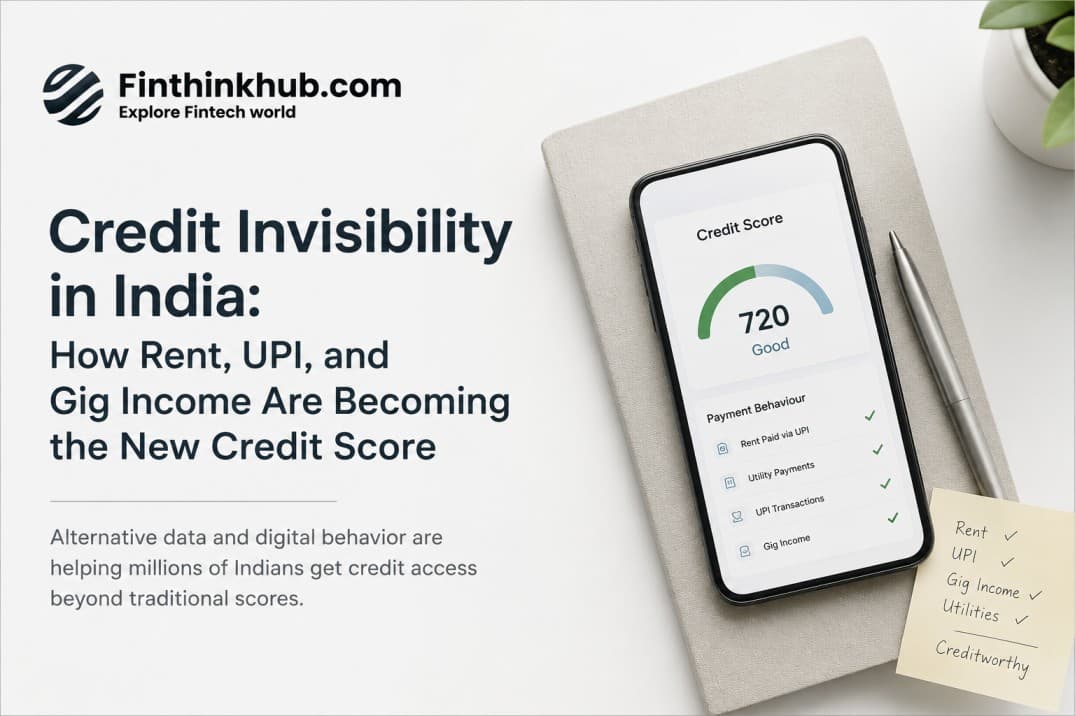
Beyond CIBIL: How UPI Is Changing Credit Scoring in India
"How rent payments, UPI transactions and gig income are helping millions of Indians build credit without a traditional c…
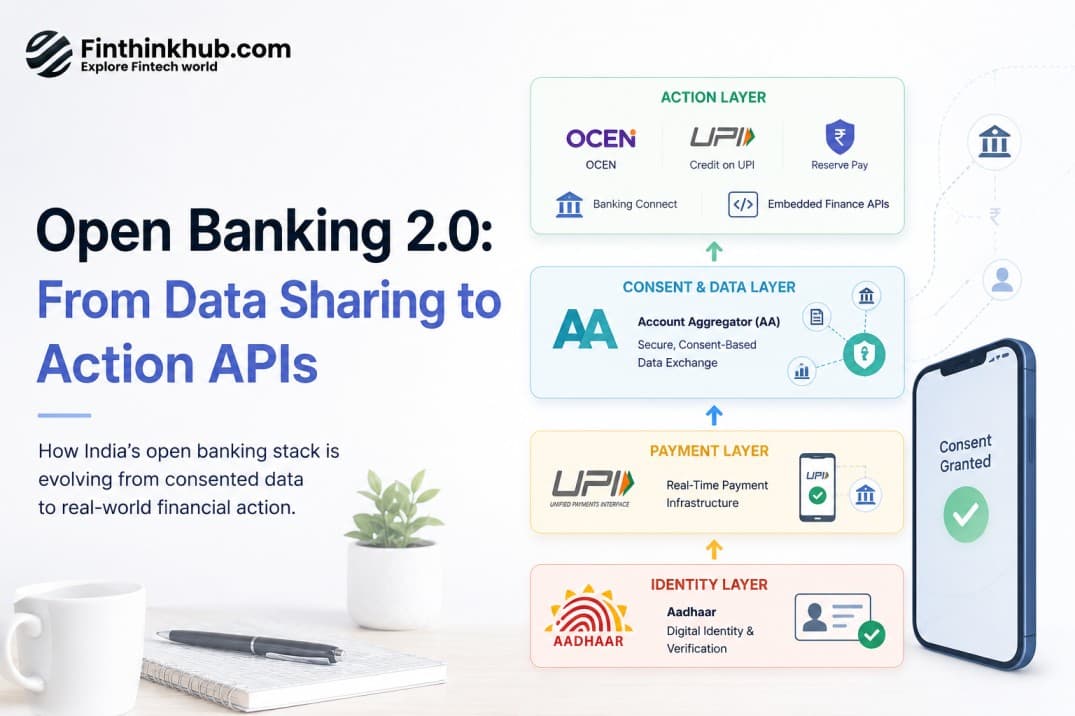
Open Banking 2.0: When APIs Stop Sharing Data and Start Taking Action
India has always built financial infrastructure in layers. Aadhaar gave every citizen a verifiable digital identity. UPI…
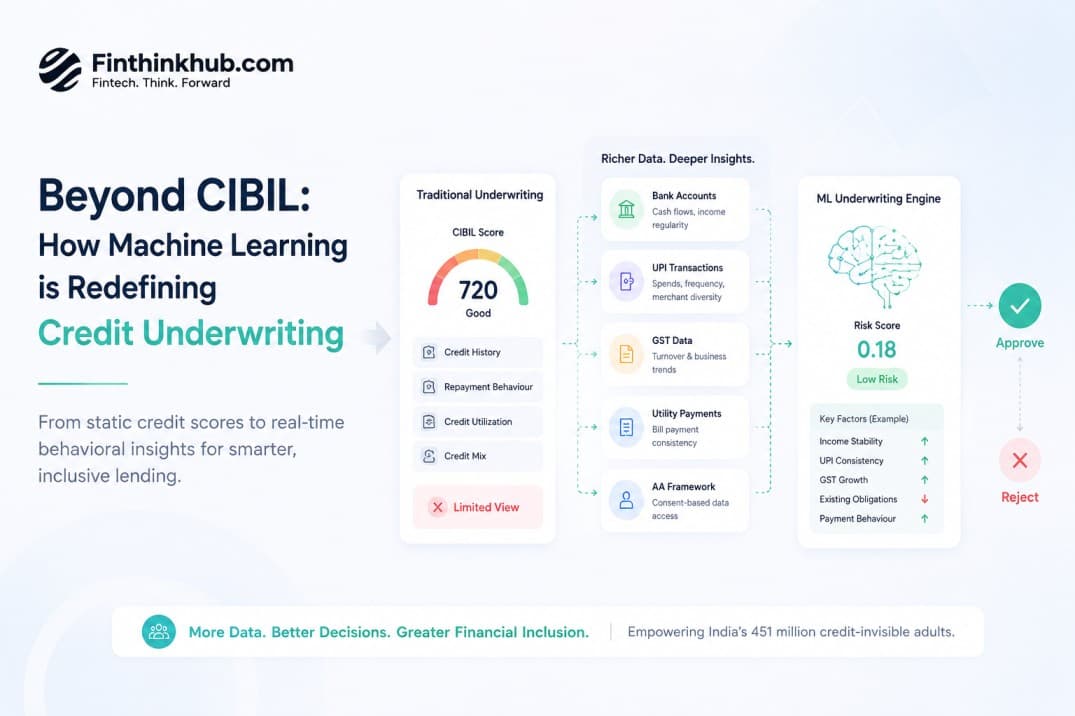
How ML Models Are Replacing FICO/CIBIL Scores in Credit Underwriting
How ML Models Are Replacing FICO/CIBIL/Experian Scores in Credit UnderwritingCredit scoring has worked the same way for …